Waiver Kiosk vs QR: Peak-Hour Check-In Guide
Compare waiver kiosk and QR flows, including roller waiver kiosk fallback patterns, to reduce lines and improve completion rates.
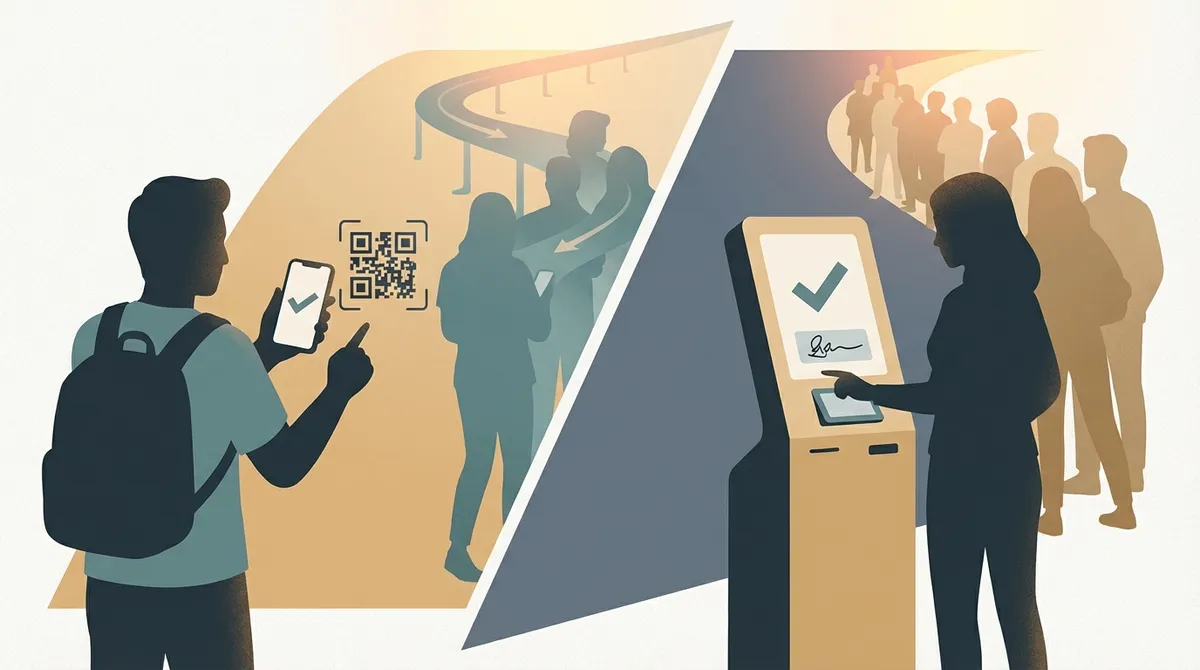
Waiver kiosk and QR check-in both work, but they solve different problems. The best choice depends on your guest mix, device availability, and how fast your front desk needs to move during peak windows.
This guide helps operators decide when to use QR, when to use kiosks, and when a hybrid model is better.
Where QR check-in wins (speed + scalability)
QR flows are ideal when most guests carry phones and arrive in waves. They scale well, cost less to run, and reduce hardware management.
For many operators, QR is the fastest path to self-serve signing.
Where a waiver kiosk wins (access + control)
Kiosks help guests who do not have phones, low battery, or poor connectivity. They also give you tighter control over the on-site experience in high-traffic entry points.
A kiosk-first setup can be useful in family venues and group-heavy operations.
Throughput tradeoffs at peak hour
QR can move lines quickly when pre-arrival signing is high. Kiosks reduce edge-case delays but can become bottlenecks if too few stations are available.
Most teams improve throughput by combining pre-arrival links with on-site QR and limited kiosk fallback.
Choosing by venue type and guest behavior
Adventure tours, gyms, and studio bookings often perform well with QR-first flows. Family entertainment venues and walk-in-heavy locations usually benefit from at least one kiosk station.
The right model is based on arrival patterns, not preference.
Operator playbook: run a hybrid flow without confusion
The strongest check-in systems use QR as the default and kiosks as a backup. This keeps speed high while covering guests who need assistance.
Define one clear process for staff: verify completion first, route incomplete guests to QR, and send true exceptions to kiosks.
Practical setup moves that improve peak-hour flow:
- QR-first messaging: include waiver links in booking confirmations and reminders.
- Entry signage: place large QR codes at parking, entrance, and front desk.
- Kiosk fallback: keep a small number of kiosk stations for exceptions.
- Roster visibility: use a live waiver roster so staff can verify quickly.
- Exception script: train staff on who goes to kiosk vs QR.
This structure prevents line stalls and keeps staff handoffs consistent.
Real-world scenarios during rush periods
A large group arrives with mixed readiness
QR handles prepared guests quickly while kiosks support those who still need to sign.
Spotty cell signal at entry
Kiosks provide a reliable fallback so check-in does not stop when connectivity drops.
Families arrive with shared devices
A kiosk station prevents device sharing delays and keeps lines moving.
QR vs kiosk decision checklist
Before choosing your primary flow, review:
- Typical percent of guests with smartphones ready at arrival
- Walk-in volume vs pre-booked volume
- Entry connectivity reliability
- Available space and staffing for kiosk stations
- Desired check-in time target per guest
FAQ
Should we choose QR or kiosk? Most operators should start QR-first with kiosk fallback.
How many kiosks do we need? Start small and size by exception volume, not total arrivals.
When does a roller waiver kiosk setup make sense? It works best in high-throughput venues with repeat family traffic and predictable exception volume.
Can we switch later? Yes. Track completion and queue times, then rebalance your mix.
Common check-in design mistakes
Peak-hour delays usually come from avoidable setup issues:
- Treating kiosk as the default when most guests can sign on phone
- Relying on QR only without a fallback for edge cases
- Placing QR codes where guests do not see them early enough
- No live completion view for staff at verification points
- No clear escalation path for incomplete waivers
A digital waiver app with clear routing logic prevents most of these delays.
A practical hybrid check-in workflow
- Pre-arrival link: send waiver by email or SMS after booking.
- QR at arrival: route incomplete guests to visible QR stations.
- Kiosk fallback: support no-phone or low-connectivity exceptions.
- Staff verification: confirm completion in a live roster view.
- Throughput review: monitor queue times and adjust QR/kiosk mix.
Related reading
Start free
Launch digital waivers in minutes.
Speed up check-in, keep clean records, and standardize consent across every location.
No credit card required.
Ready to speed up your check-in?
Join hundreds of operators using FlexWaiver to simplify their waivers and protect their business.